


CERTIFIED & COMMITTED

ORGANIC (DE-ÖKO-003)

EMAS-VALIDATED

VEGAN

GREEN BRANDS

BIODIVERSITY
 OUR POSITION
It's not just what we make that counts. It's how we do it.
PHARMOS NATUR was founded in 1986 based on the realization of the power that plants can possess. This heritage continues to shape our company to this day.
This has evolved into an approach that takes a holistic view: the cultivation of our plants, the people who grow and harvest them, the processing of raw materials, the manufacturing of our products, the choice of packaging, our company location in Bernried, shipping, and the partnerships that support it all.
For us, sustainability means considering these areas in an interconnected way and acting with care along this path: through certified organic farming, long-term relationships with our farming partners, meticulous production processes, a mindful use of materials and resources, and a commitment to thoroughly reviewing and refining our decisions.
"Plants can work true wonders. Anyone who works with them has a responsibility to the plant, to the people who grow it, and to the earth on which it grows."
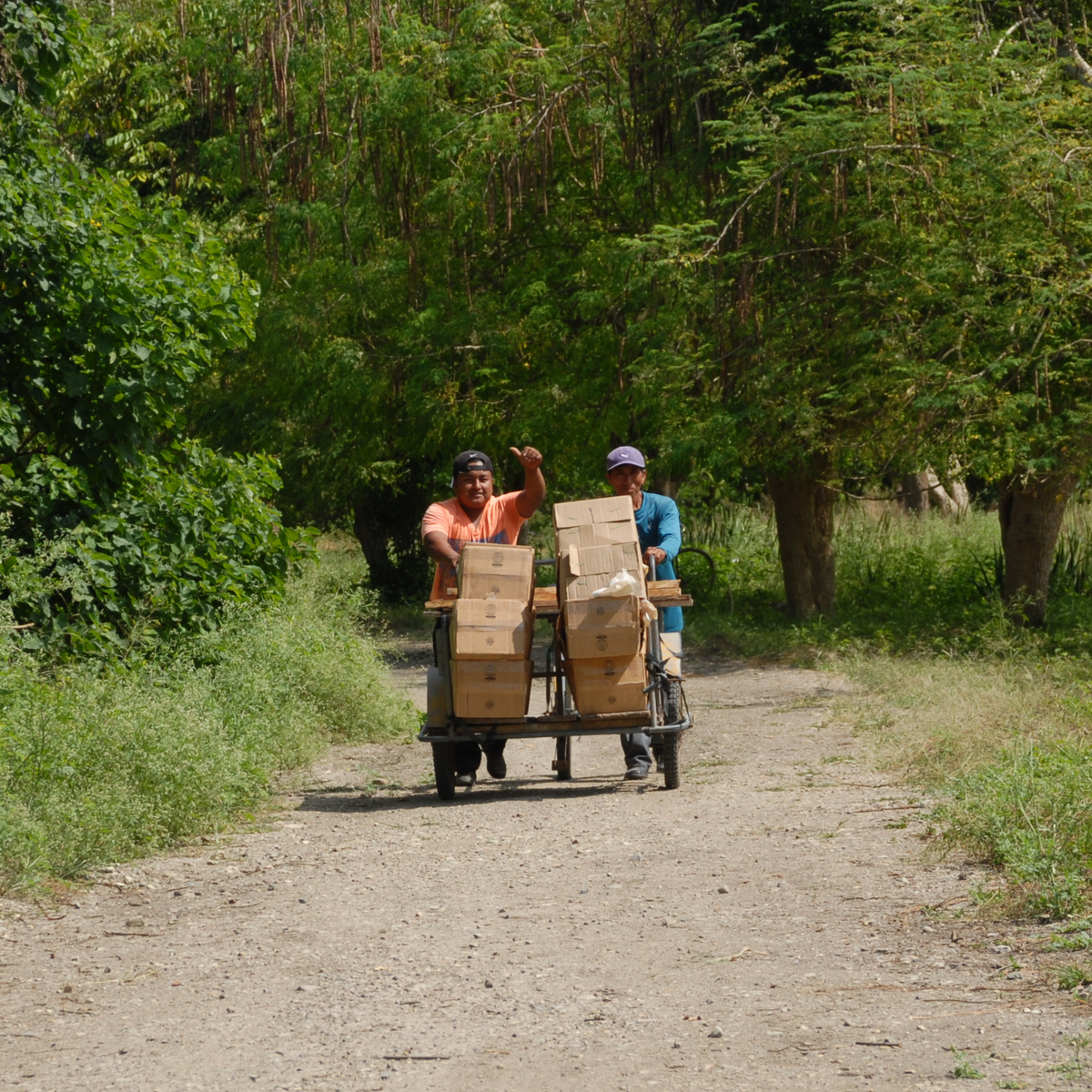
Organic farming takes time, knowledge, and trust.
Behind PHARMOS NATUR’s formulations are approximately 200 farming families worldwide. Our plants grow in places such as Yucatán and Campeche, on Ecuador’s Pacific coast, in India, Nepal, Oman, and the Andes.
Our plants are grown using certified organic farming methods. This means we do not use synthetic chemical pesticides, synthetic mineral fertilizers, or genetically modified organisms. Our cultivation practices adhere to organic standards and are monitored by independent certification bodies.
Several factors are crucial to the quality of raw materials: the right location, healthy soil, climate, harvest timing, and careful handling of the plant after harvest. Organic farming is therefore not just a matter of standards, but also a matter of experience and attention to detail.
Our partnerships are also built on this foundation. We work with our farming partners for as long as possible, agree on reliable purchase commitments, and ensure fair payment above market price. This creates a partnership that is based not only on raw materials, but also on trust, continuity, and mutual responsibility.
What we actually do. And how we report it in numbers.
Our environmental management system has been EMAS-certified since 2020. The annual audit conducted by external environmental auditors ensures that our environmental performance is documented and comparable. It shows where we are making progress and where further action is needed.
Emissions from raw material transportation. By making adjustments to harvesting, handling, transportation, storage, and production planning, we were able to reduce emissions from raw material transportation from 87 metric tons of CO₂e in 2024 to 67 metric tons of CO₂e in 2025. This represents a reduction of approximately 23 percent within one year.
Energy at the Bernried Site. At our Bernried site, we use a proportion of green electricity and generate our own renewable energy through our photovoltaic system. In addition, we have switched to more sustainable electricity and natural gas providers. Energy consumption, technical processes, and material flows are systematically tracked as part of our environmental management system.
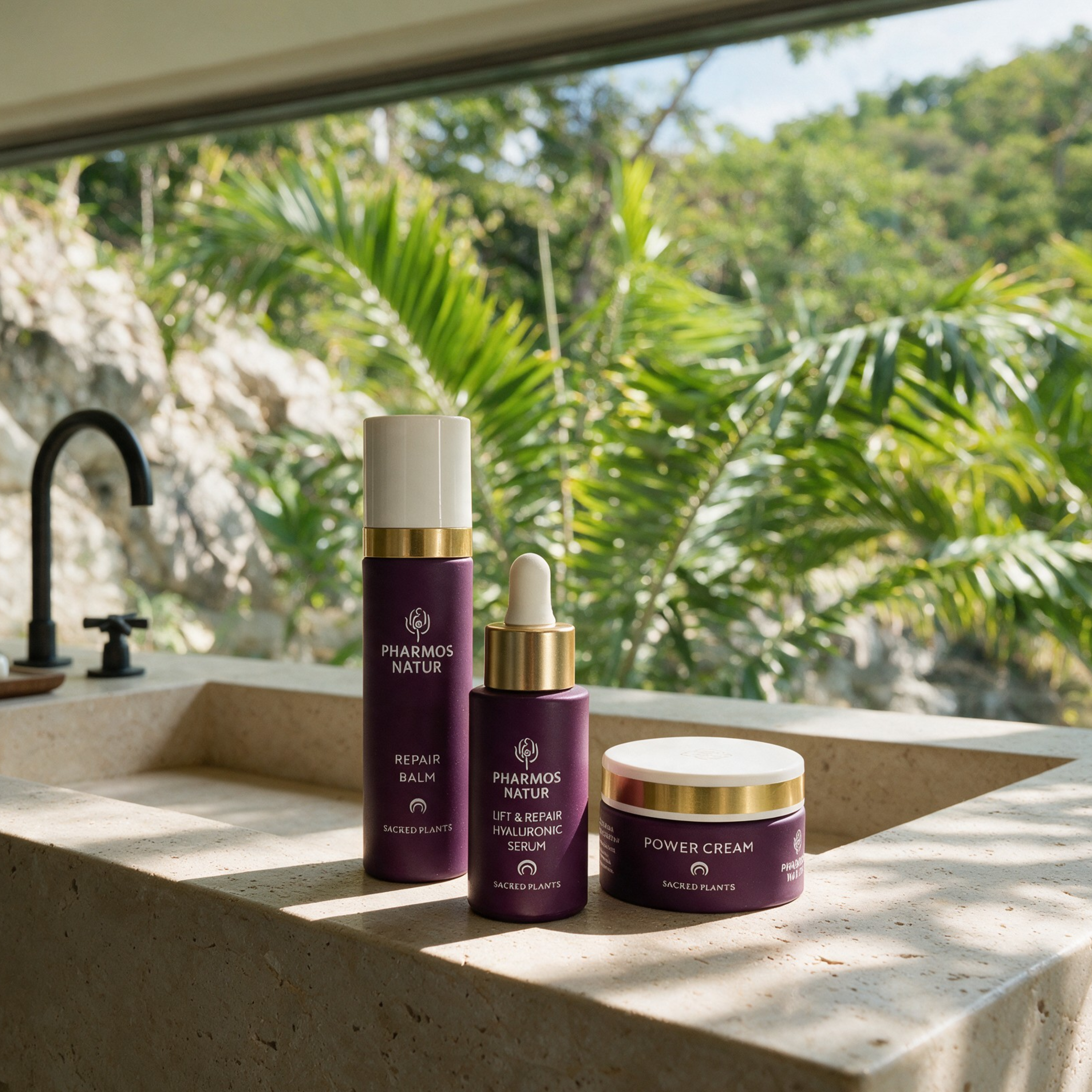
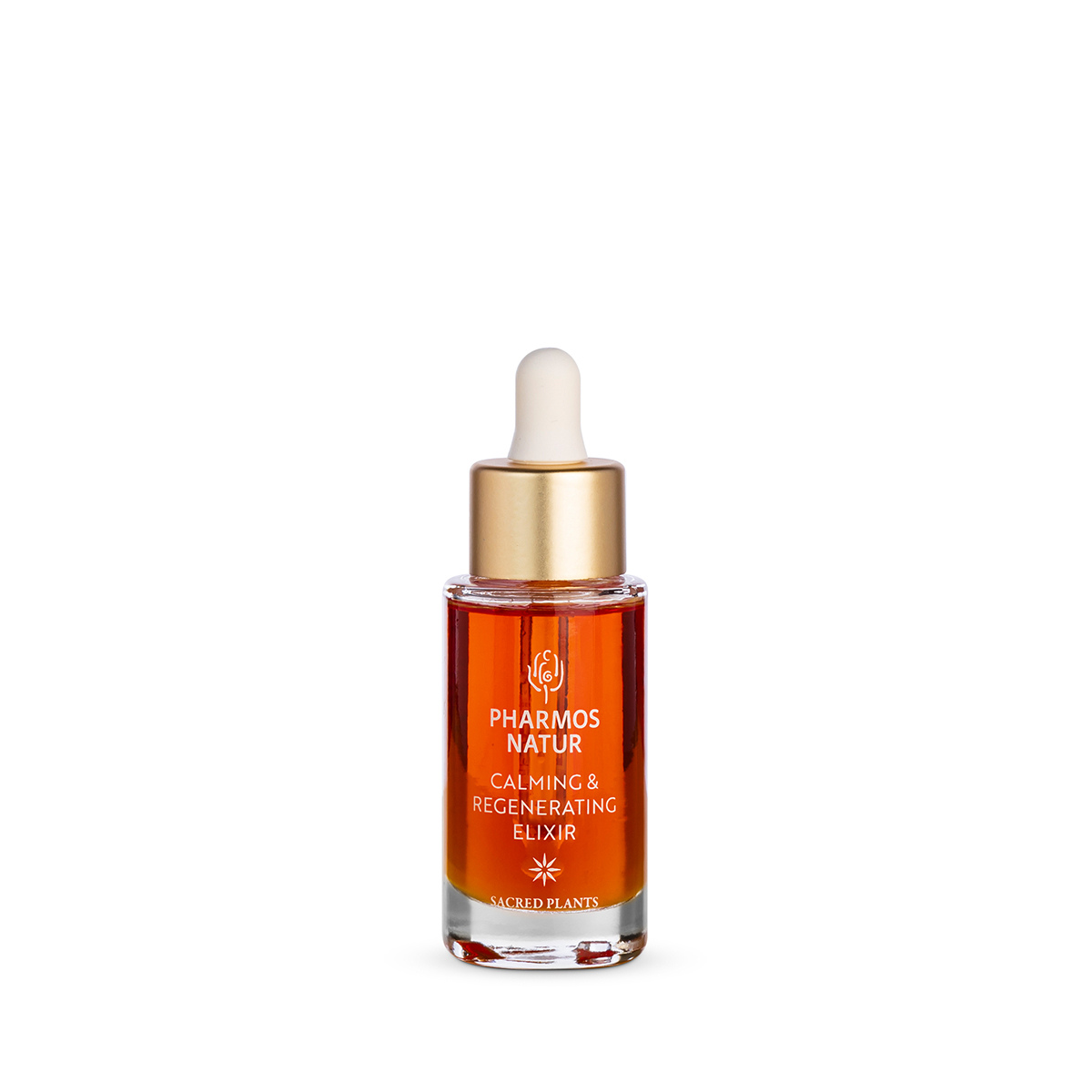
Materials and Packaging. Our office paper has been fully FSC-certified since 2020. We are also gradually improving our packaging with a focus on conserving resources, recyclability, and maximizing the product’s usability.Creams are sold in glass bottles with food-grade polyethylene inner pouches. The pouch allows you to use every last bit of the product and can be separated from the glass and disposed of after use. We fill oils into recyclable glass bottles with dispensers.
Manufactured in Germany. Our products are bottled in Germany in small batches and under strict quality control. This keeps the processes between manufacturing, testing, and product development streamlined and allows for careful handling of the raw materials.
Verified standards. And voluntary accountability.
The following certifications, memberships, and commitments demonstrate the issues that are important to PHARMOS NATUR. Some standards are verified by external bodies, while others reflect our commitment, partnerships, or our own principles in product development. They provide an overview of how we understand responsibility—in cultivation, in our operations, in the selection of our raw materials, and in our use of resources.
What is that?
"Organic" refers to certified organic production and processing. The EU Organic Regulation specifies the standards according to which organic raw materials are grown, processed, labeled, and inspected. Clear guidelines apply to the use of pesticides and fertilizers; genetically modified organisms are prohibited. The certification number DE-ÖKO-003 identifies the responsible German organic certification body.
What does that mean for us?
PHARMOS NATUR uses plant-based raw materials from certified organic cultivation. We carefully select these raw materials and verify them based on organic certification. For us, “organic” is not just a label, but a binding standard in the selection of raw materials: from the plant’s origin through to further processing.
What is that?
NCS stands for Natural Cosmetics Standard. The standard defines requirements for certified natural cosmetics and specifies which ingredients and manufacturing methods are compatible with these standards. The focus is on natural raw materials, transparent formulations, and the exclusion of certain groups of substances, such as microplastics, silicones, PEGs, parabens, phthalates, and genetically modified organisms.
What does that mean for us?
All PHARMOS NATUR cosmetic products are certified according to the NCS standard. This ensures that our cosmetic formulations are independently verified to meet the requirements for certified natural cosmetics. For us, NCS complements our selection of organic raw materials with a product-specific standard for the finished cosmetic product from the ingredients used to the formulation itself.
What is that?
FSC stands for Forest Stewardship Council. The certification system applies to wood, paper, and packaging materials sourced from responsibly managed forests, recycled materials, or controlled sources. Chain-of-custody certification ensures that these materials are processed and labeled in accordance with FSC standards throughout the supply chain.
What does that mean for us?
At PHARMOS NATUR, we use FSC-certified paper-based materials. These include our office paper, as well as the folding boxes and package inserts for our products. In this way, we ensure that these materials also come from traceable sources, are produced through responsible forest management, and are used in a sustainable manner.
What is that?
EMAS stands for Eco-Management and Audit Scheme. It is a voluntary environmental management system of the European Union. Under this system, companies identify their significant environmental impacts, set improvement goals, and regularly publish an environmental statement. This statement is externally audited and validated by accredited environmental verifiers.
What does that mean for us?
PHARMOS NATUR has been using EMAS since 2020 to systematically track and improve environmental performance at its facility. This includes, among other things, energy consumption, emissions, material use, water, waste, and transportation. The annual environmental statement highlights where we are making progress and where further action is needed.
What is that?
Green Brands is a quality seal for environmentally sustainable brands. The award is granted through a multi-stage process involving nomination, validation, and a jury decision. The evaluation focuses not on individual product formulations, but on the environmental orientation of a brand or company.
What does that mean for us?
PHARMOS NATUR has been recognized as a Green Brand. For us, this is a testament to our long-term commitment to organic farming, environmental management, resource conservation, and the responsible use of raw materials. At the same time, we do not view this recognition as an end in itself, but rather as an incentive to continue improving our environmental performance in a transparent manner.
What is that?
In the context of cosmetic products, “vegan” means that the formulation contains no ingredients of animal origin. For PHARMOS NATUR, this also entails a commitment to developing products without animal testing and to demonstrating the safety of cosmetic products through the evaluation and documentation procedures required by law.
What does that mean for us?
PHARMOS NATUR views veganism as a personal commitment in product development. Our formulas are vegan with the exception of a few clearly labeled products in which we deliberately use natural ingredients of animal origin: the Nourishing Rose Cream with beeswax and the Lip Balm with honey. This makes it easy to see which products are vegan and where we make an exception for formulation reasons.
What is that?
The EU Organic Regulation establishes binding standards for organic farming and processing. The control number DE-ÖKO-003 identifies the responsible German organic certification body, which conducts inspections once a year on-site, including sampling and a review of documentation.
What does that mean for us?
Our aloe vera plants and all other plant-based raw materials come from certified organic cultivation—free of synthetic pesticides, synthetic fertilizers, and genetically modified organisms. The organic certification process covers the entire process, from the cultivation fields to the bottling in Germany.
What is that?
The EU Organic Regulation establishes binding standards for organic farming and processing. The control number DE-ÖKO-003 identifies the responsible German organic certification body, which conducts inspections once a year—on-site, including sampling and a review of documentation.
What does that mean for us?
Our aloe vera plants and all other plant-based raw materials come from certified organic cultivation free of synthetic pesticides, synthetic fertilizers, and genetically modified organisms. The organic certification process covers the entire process, from the cultivation fields to the bottling in Germany.
“Economic activity always entails a sense of responsibility for the whole. The more consciously we act, the greater the opportunity to create sustainable prospects.”
Our Goals. By 2030.
EMAS requires more than just documenting the current status. It requires the definition of measurable goals and honest reporting on progress and setbacks. Our 2026 Environmental Statement outlines four key initiatives:
1. Further reduce emissions. The reduction in raw material transportation (87 → 67 t CO₂e) shows that there is significant potential for improvement in the logistics process. We are working on further reductions—in particular through consolidating shipments, optimizing warehousing, and gradually transitioning our vehicle fleet to electric vehicles.
2. Further develop packaging solutions. Glass remains our standard. For areas where multi-component solutions are still used today, we are exploring simplified designs with higher recycling rates by 2030.
3. Improve energy efficiency. At our Bernried facility, we rely on a combination of solar power generation, green electricity procurement, and ongoing efficiency audits of our production facilities. The goal is to reduce specific energy consumption per unit produced.
4. Track biodiversity in our farming operations more precisely. Over the next few years, we will supplement our farming data with specific biodiversity indicators: soil fertility, species diversity on our farmland, and the preservation of local seed diversity. This data will be included in our progress report for Biodiversity in Good Company.
For us, progress doesn't mean simply presenting a new program. It means backing up what we do with data and consistently moving forward.
Sustainability Report 2025
Find out more about our commitment, our progress and our goals for the future in our latest sustainability report.
More about PHARMOS NATUR